Welcome to ReliveIt
By Nicolas
Welcome to ReliveIt! Before anything else, say hello to the house in the top left corner of this page. That’s our old family home, drawn in pixels and looking rather proud of itself. The real one is, sadly, rotting.
Which is more or less why this game exists. ReliveIt began as an idea to save that house. The plan was to make a game about living a life, and hope it helps rescue the place. Not the most standard restoration strategy, I know. The pixel version, at least, is never going to rot.

Do not judge my artistic capabilities, my art teachers bullied me enough at school
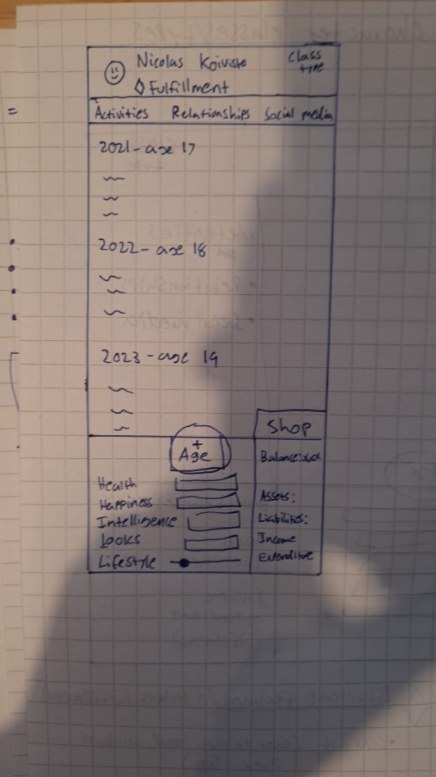
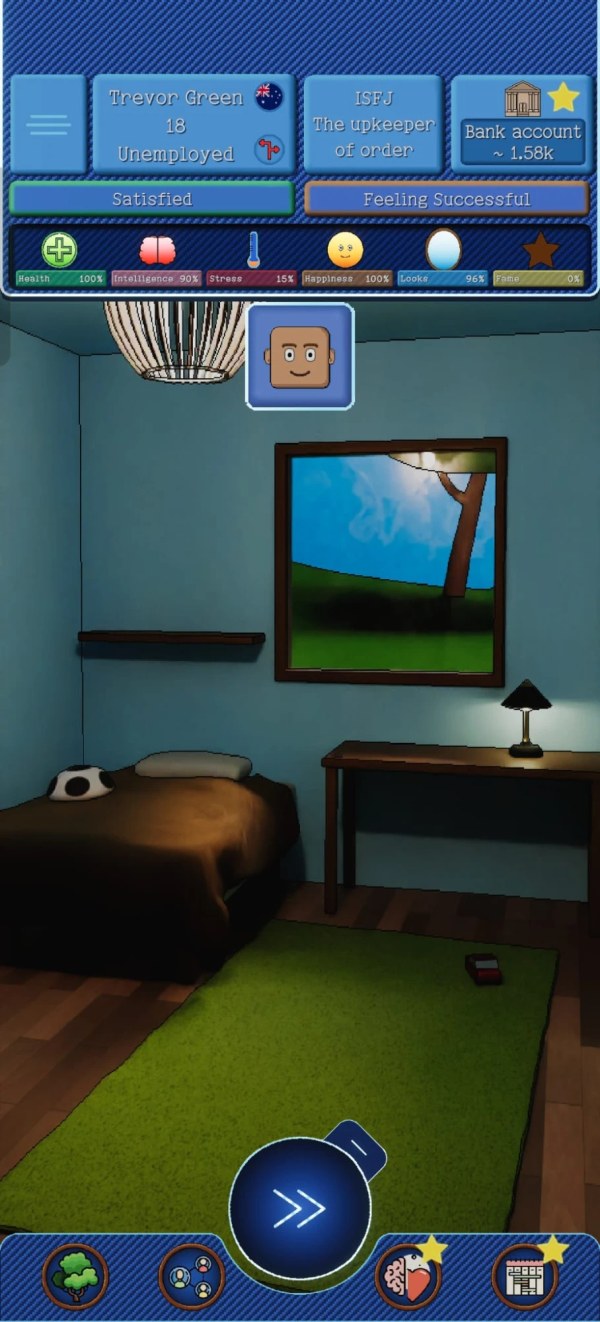
Here it is, the very first prototype of ReliveIt, on the left, drawn in pen on a single sheet of grid paper. On the right, the game as it looks today. Same idea, a few years and one very talented graphics lead later.
The prototype had a character, tabs for activities, relationships and social media, a shop and a panel of stats, and a life lived one year at a time. That was later shortened to half a year at a time.
It may remind you of some other games on the market, but luckily we learnt how much they suck and did something a lot more ambitious! It also had a few hidden new elements, and if you can figure out which ones were unique and made it into the current version, I’ll give you 10 points.
Then I managed to convince the rest of the team to join in a whisky bar (no alcohol involved), and our six-month project began. It turned into a few years.
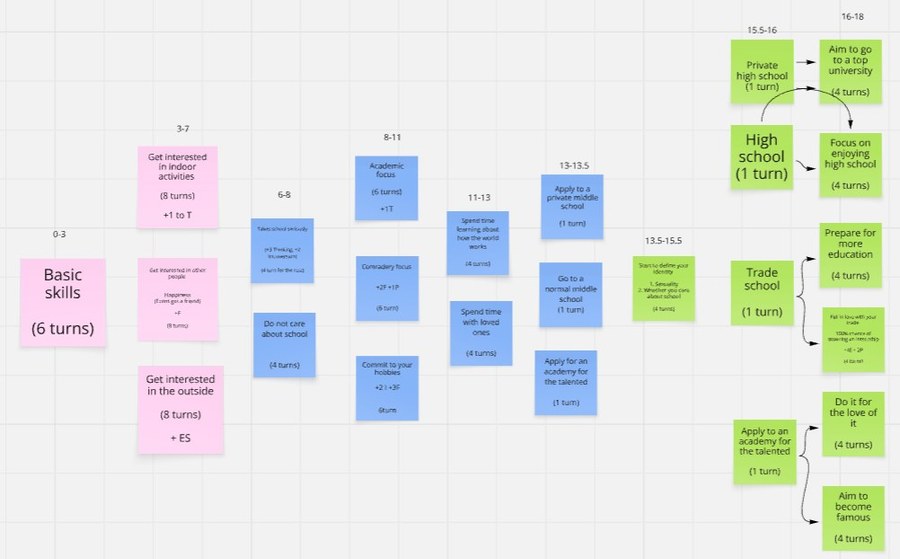
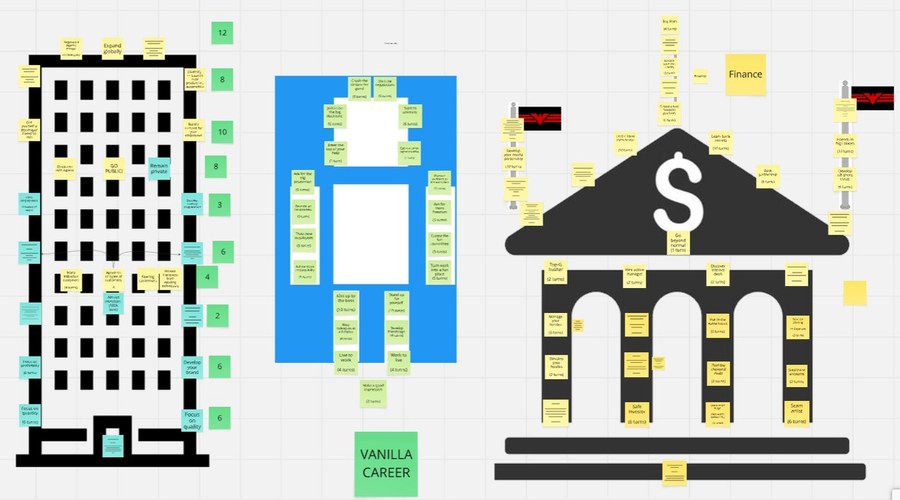
We opened an infinite online whiteboard called Miro and refused to leave. Starting on 21 May 2024 we got on a call almost every day and brainstormed from midday till midnight, throwing ideas at the wall to see what stuck.
From Miro to spreadsheets to Unity
The game soon outgrew the whiteboard. Over time our process moved through four stages.
1. Miro. Perfect for global planning and big-picture design, but it couldn’t handle the nitty-gritty of everyday work.
2. Google Docs. This is where the general game logic, the design and our first, very rudimentary events were written down.
3. Google Sheets. Roughly 80% of the game’s events were written here. These are the original spreadsheets, and they went directly into the game.
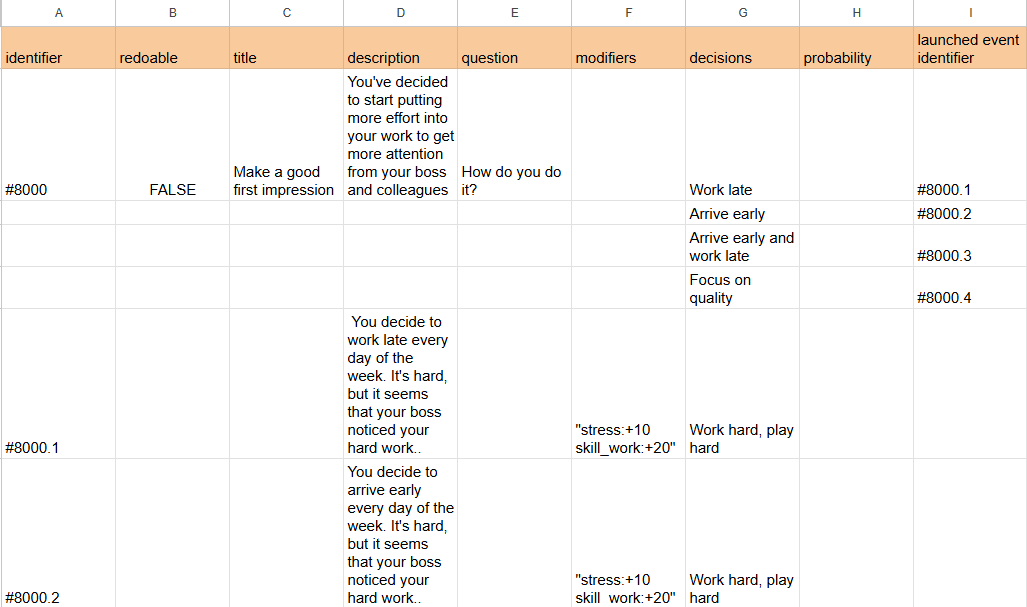
4. Unity. Our own proprietary event editor, which is how events are written today.
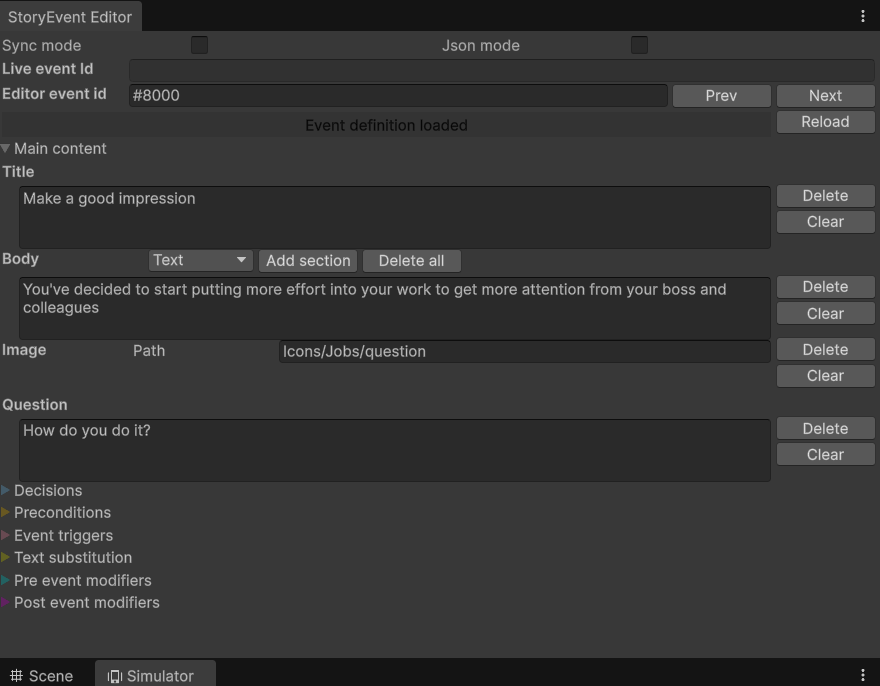
ReliveIt is nearly finished. Come in, look around, and play the first 18 years in your browser. Mind the floorboards.
Nicolas